How to Tell If an Artist Opportunity Is Worth Your Time
Before you lose a week to a deadline, work out what the opportunity is really offering and what it will ask of you.
An open call can be free and still be expensive. The price might be a Saturday spent cutting a statement to 300 words, new photographs you had not planned to take, two favors from references, and several days when the work itself barely moves.
Then there is the deadline. A date in bold type has a peculiar way of making an opportunity feel more important than it did five minutes earlier. Add a familiar institution or a large award figure and it becomes easier to open the application portal.
Pause here and first, ask whether the opportunity deserves an application from you. Four things usually settle the question: fit, value, cost, and trust. This does not require a spreadsheet. Most of the time, ten honest minutes will tell you whether to keep reading.
Start with the boring facts
First, try to disqualify the opportunity. This sounds severe. It is also a good way to save an hour. Check the deadline and its time zone, geography, discipline, career stage, program dates, and whether you need to be present in person. Read the dates against your actual calendar. A six-week residency is not a six-week residency “sometime next year” if it overlaps with teaching, care work, or a show already on the books.
Now find the part that says what every selected artist receives. Circle the verbs if you need to. “Will receive” is different from “may receive.” “Up to $10,000” does not tell you what a typical award is. Access to a network, the possibility of a studio visit, and exposure to new audiences may be welcome, but they do not belong in the same column as a confirmed fee, stipend, room, or production budget.
Fit should not require a costume
You are eligible for many things that are not meant for you. A call might accept “all media” while the organization’s recent programs lean heavily toward social practice, new technology, or work made with a particular community. That is useful information. Look at the mission, the language of the call, the jurors, and a few past selections when they are available. You are looking for a pattern, not a template to imitate.
The best evidence of fit is already in your studio. There is recent work you can submit without explaining away half of it. You know why this place, resource, or audience matters now. The application may ask you to frame the work clearly, but it should not require you to invent a more fashionable practice for the afternoon.
What changes on Monday morning?
Imagine the acceptance email arrives. What can you do next that you cannot do now? Order the material. Book the train. Stop taking freelance work for a month. Use the kiln, archive, sound studio, or stretch of land the program controls. Finish the piece at the scale it needs. Meet a curator who has a real reason to spend time with the work.
Name one primary change. “This grant pays for fabrication” is useful. “This residency gives me three weeks and the kiln I need to test the new work” is useful. “This would be good exposure” needs another round of questions. Exposure to whom, in what setting, and with what evidence that anyone will stay with the work?
Do the ugly budget
The application fee is the easy number because somebody printed it. The harder costs are scattered across the FAQ, participation agreement, travel page, and your own life. Add the new documentation, shipping, insurance, travel, visa, meals, local transport, materials, childcare, access support, and unpaid time. Some of those costs only appear if you are selected. They still count.
Write down the whole exchange
What is guaranteed? What will you spend to apply? What will you spend if chosen? What part of the award is actually left for you and the work?
What Art Goat is seeing
Application fees in the Art Goat catalog
At Art Goat, we prioritize listing opportunities that do not charge significant application fees. On September 1, 2026, we analyzed a sample of 209 published art opportunities in our catalog. We found that 167 had no application fee and 42 charged a fee. Among the calls with a positive fee, the median was $25.
- Number of opportunities with no application fee
- 167
- Number of opportunities with an application fee
- 42
- Median positive fee
- $25
Of the 209 opportunities with confirmed fee information, 42, or 20.1%, charged an application fee. Fees ranged from $10 to $75, with a median of $25.
A rough budget is enough. Suppose a commission lists $3,000, but that sum must cover your time, materials, fabrication, delivery, insurance, installation, and tax. You have not been offered a $3,000 artist fee. You have been offered a small project budget. A residency with free accommodation but no travel or living stipend may be a wonderful fit, but you should know how much of it you are funding yourself.
Read the organization, not only the call
You can learn a great deal from the way an organization explains the exchange. Is there a timeline? A person you can contact? Does it say how many artists will be selected, when they are paid, and what happens to the materials you submit? For an exhibition or commission, find the clauses about copyright, image use, fabrication, installation, sales, insurance, and ownership before you get attached to the outcome.
Small organizations can be imperfect without being careless. A new program may not have a beautiful handbook or years of alumni. Send a short, specific question. The quality of the answer matters. A direct reply can settle a concern; an evasive or contradictory one becomes part of the cost of saying yes.
Pause when you see:
- A fee with no explanation of what it supports
- No clear description of what selected artists receive
- Broad rights to reproduce or commercialize your work without limits
- Pressure to pay, commit, or provide sensitive information immediately
- A large amount of speculative work requested before selection
- Important costs or obligations revealed only after you begin the application
One of these might be an oversight. Three of them are a pattern.
A scorecard for deadline brain
Deadlines make weak opportunities look briefly convincing. When that starts happening, give fit, value, cost, and trust zero, one, or two points. Zero means poor or unknown. One means mixed. Two means clear and strong. Do it quickly. The score is there to expose the shaky part, not to impersonate scientific precision.
Can you point to recent work that belongs here without rewriting your practice for the panel?
Can you name what this would let you make, learn, finish, or change?
Do the numbers still work after travel, materials, time away, and the costs nobody put in the headline?
Are the terms and people clear enough that you would feel comfortable saying yes?
A six with uncertain costs calls for a budget. A six with vague terms calls for an email. A four carried by a famous logo is still a four.
You can still make an exception. A long shot may be worth it when the fit is uncanny, most of the material already exists, or the questions help you articulate a project you plan to pursue anyway. Just call it an exception. “I know this is unlikely, and here is why I am spending Sunday on it” is a perfectly respectable decision.
Three calls, one artist
A framework is more useful when somebody has to make an actual choice. Consider an artist who lives in Los Angeles. They make paintings and room-sized installations from neighborhood signs, family photographs, and advertising scraps. They have worked professionally for eight years, teach three days a week, and pay $650 a month for a corner of a shared studio. Their next project needs more wall space, better documentation, and several uninterrupted weeks of work.
The artist is eligible for all three opportunities below. That does not make all three equally sensible. We are using the terms available in Art Goat’s opportunity records and on each organization’s website, checked September 1, 2026. Programs change. An artist making a real decision should always confirm the current call.
18th Street Arts Center: Local Studio Artist Residency
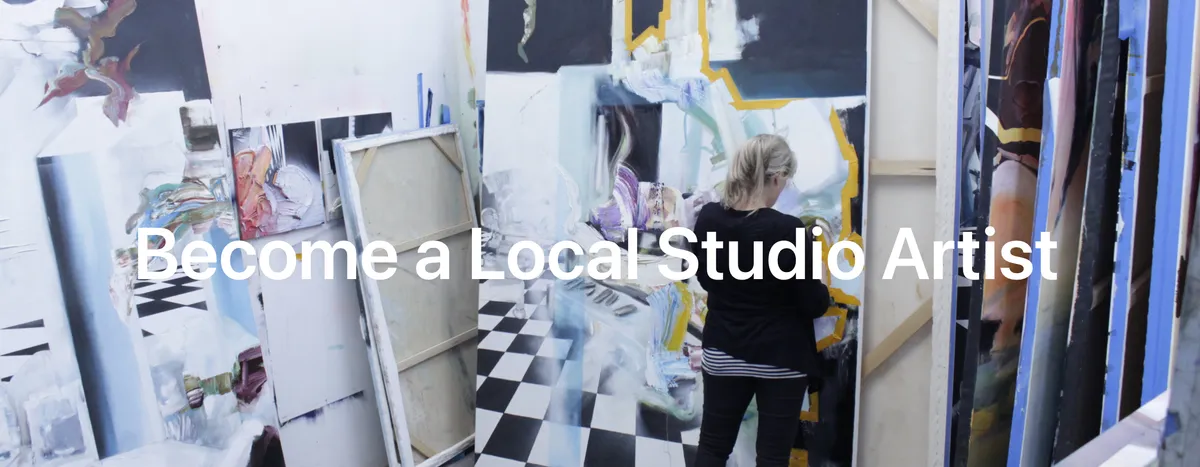
This is not a retreat with a stipend. It is a chance to rent a subsidized live/work or day studio in Santa Monica for one to two years, with possible renewal. The organization says studios generally range from 400 to 1,000 square feet and rent for roughly $1 to $2 per square foot. Applications are rolling, but a vacancy may only appear every two or three years. The basic packet is a letter of interest, CV, and work samples, followed by an interview for potential candidates.
For this artist, the word “residency” matters less than the room. A private 400-square-foot studio near the low end of the stated range could cost less than their current shared corner. A larger space near the high end could cost much more. The application is manageable because their CV and images already exist, but they need to state exactly how the work connects to 18th Street’s interest in art that provokes public dialogue.
The work is local, public-facing, and already needs the kind of space on offer.
A stable studio could change what they are able to build every week.
The rent may be excellent value, but the exact room and monthly price are not known yet.
The term, review process, materials, and broad rental range are described clearly.
Decision: Apply. The packet is light, the fit is specific, and the main unknown can be settled before they accept a studio. Their question for the organization is practical: what spaces are likely to open, and what would each one cost per month?
Skowhegan School of Painting & Sculpture
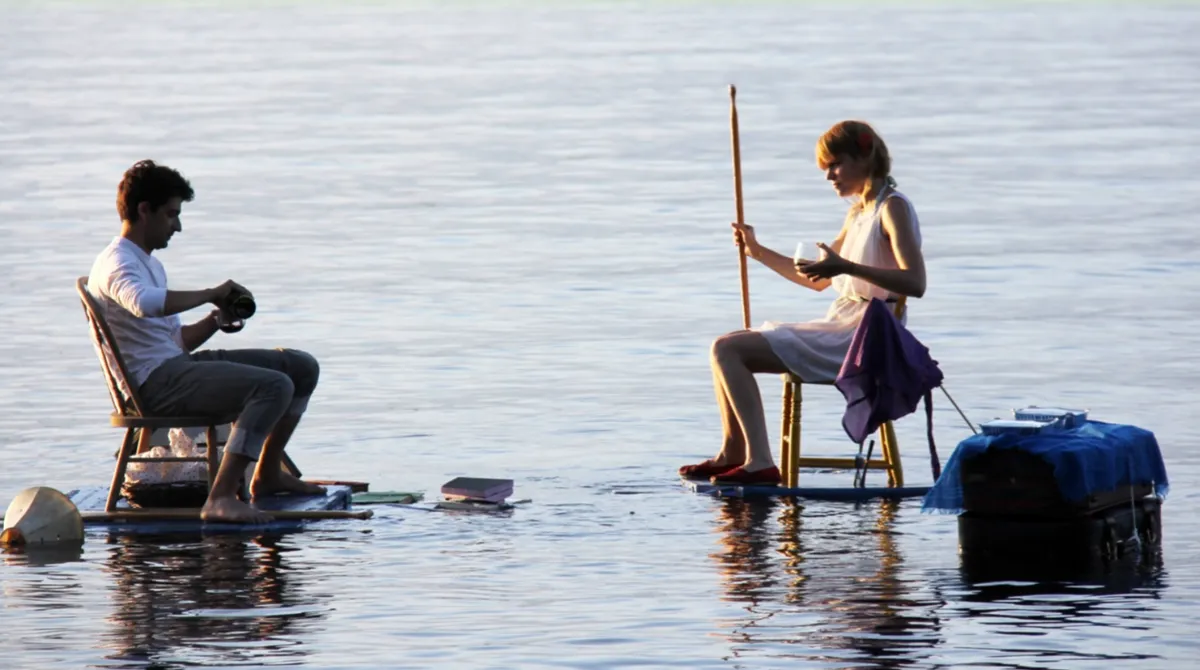
Skowhegan’s 2027 application opens September 1. The nine-week summer program brings about 60 to 65 artists to a rural campus in Maine. The usual application asks for 10 images or six minutes of video, contextual notes, a short video introduction, and two references. References do not write letters. The fee rises during the application window, from $20 to $50, so waiting until the last minute has a literal price.
Their work fits the program, and nine weeks with a studio and fabrication facilities could move the new installation forward. The difficult part is not the portfolio. It is leaving Los Angeles for most of the summer. Skowhegan says tuition assistance can meet demonstrated need, but domestic travel, materials, lost teaching income, and the cost of keeping their studio at home remain their responsibility. Family and friends cannot stay on campus outside the designated visitors weekend, which also belongs in the decision.
Their installation practice, curiosity, and interest in exchange suit the program.
Nine focused weeks and fabrication access could materially change the project.
Aid may cover tuition, but travel, materials, lost income, and nine weeks away remain.
The selection process, application materials, fee changes, and campus conditions are public.
Decision: Resolve the calendar before polishing the application. If they can cover the time away and the remaining costs, this is a defensible long shot. If they cannot, a beautiful portfolio will not fix the underlying problem.
Creative Capital Award
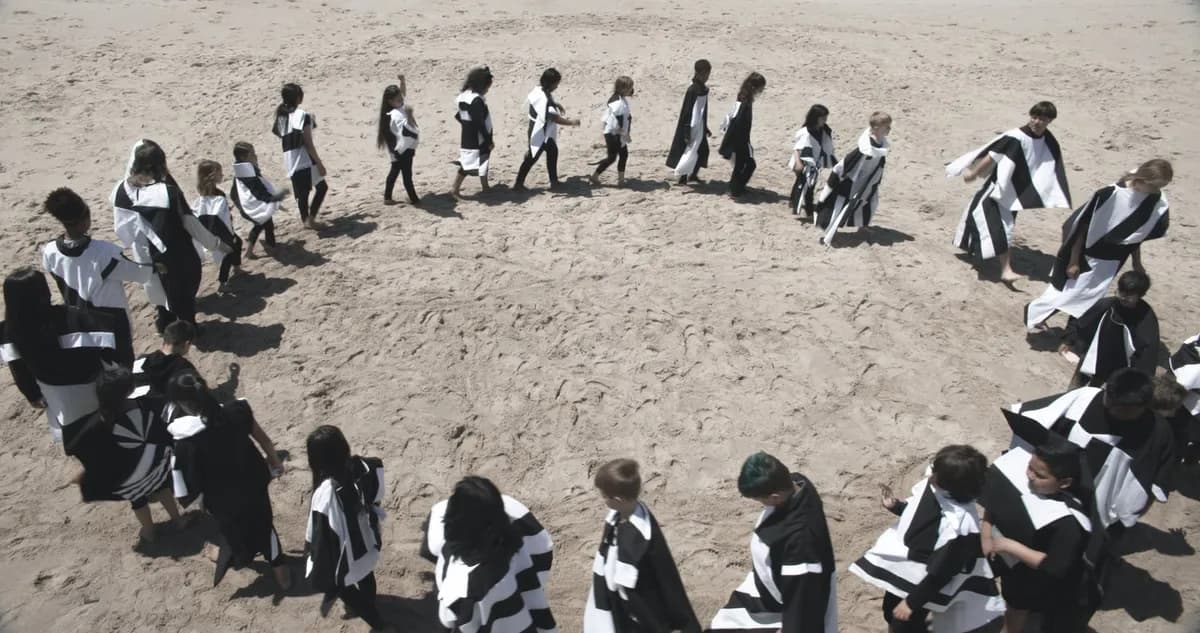
Creative Capital’s recent award cycle offered project grants from $15,000 to $50,000, with no application fee. It is a national, multi-round process. The first round asked for a project description, four short answers, a bio, a resume, and one sample from completed work. Artists who advanced then supplied an itemized budget, a timeline, up to two more samples, and proof of eligibility. The staged process keeps every applicant from doing the heaviest work at once, but a serious proposal still needs a serious plan.
The artist meets the age, location, and years-of-practice requirements. The problem is readiness. They can describe the installation’s subject, but they have not tested its modular structure, priced the fabrication, or decided where the finished work could live. The award would be transformative. That does not make a hazy project competitive, and a prestigious deadline is a poor substitute for research.
The project is ambitious and original, but it is not developed enough to explain cleanly.
Funding at this scale could pay for fabrication, collaborators, and the artist’s time.
There is no fee, but the proposal, work sample, budget, and later-round materials take real time.
The handbook names the review stages, required materials, eligibility, and award range.
Decision: Not yet. The 2027 round is already closed, which is useful rather than tragic. They can spend the next few months testing a section, getting fabrication estimates, and writing a budget they believe. “Not this cycle” preserves a strong future application.
These examples are not rankings of the organizations. Each call is offering a different exchange. The point is to make the artist’s circumstances visible beside the headline. Browse current residencies and grants, then run the same exercise with your own calendar and numbers.
Keep your own evidence
Keep a plain record after you apply: the deadline, what you sent, hours spent, direct costs, result, and any feedback. Nothing elaborate. After ten applications, your notes will tell you things this article cannot. You may discover that a certain portfolio sequence travels well, that filmed introductions eat an entire day, or that small programs close to your practice lead to better conversations than broad national calls.
Some applications are worth the gamble. Some are worth doing because they force a half-formed project into language. Some are simply not worth another night away from the studio. Protecting that time does not make you unambitious. It gives the ambition somewhere to happen.
About the author
Charles Beaman, Co-founder of Art Goat.